
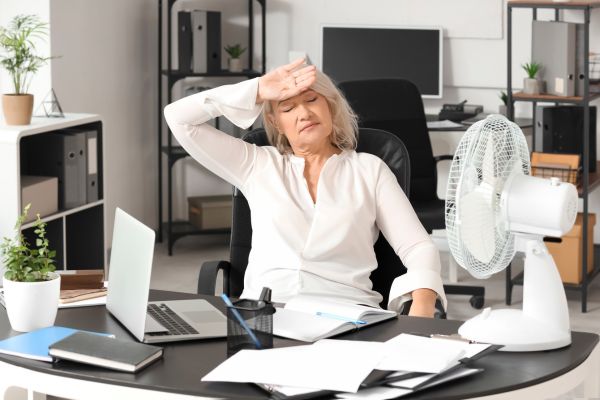
A hot flash can arrive without warning. One moment the room feels comfortable; the next, heat rises through the chest and neck, the face becomes flushed, and sweat appears even though nobody else seems warm. At night, the same reaction can disturb sleep and leave the following day feeling much longer than it should.
Hot flashes, also called vasomotor symptoms, are common during perimenopause and menopause. They often last from about 30 seconds to 10 minutes, although the pattern varies widely. Some women experience them occasionally, while others deal with repeated episodes for years.
Managing hot flashes naturally is usually less about finding one perfect remedy and more about building realistic habits. Comfort measures can make episodes easier to handle, while certain psychological and lifestyle approaches may reduce how disruptive they feel.
Understanding What Happens During a Hot Flash
Hot flashes are linked to changes in the body’s temperature-control system as estrogen levels fluctuate. The brain becomes more sensitive to small shifts in body temperature, triggering sweating and increased blood flow to the skin as though the body needs to cool down quickly.
This can make the experience feel less mysterious. A hot flash is not simply “feeling warm,” and it is not a failure to cope with stress. It is a physical response. Anxiety may make an episode feel more distressing, but the symptom itself is real.
Keep a Symptom Diary Before Changing Everything
Caffeine, alcohol, spicy meals, hot drinks, stress, and warm rooms are often described as triggers. Some women notice clear patterns. Others experience flashes without any obvious cause.
Clinical evidence has not established trigger avoidance as a reliable treatment for everyone. That does not mean personal patterns are imaginary; it means broad restriction is not always necessary.
A short diary can be more useful than eliminating half the diet at once. Record when an episode occurs, what was consumed beforehand, room temperature, stress, activity, sleep quality, and menstrual changes. After several weeks, repeated patterns may become visible.
Make Cooling Practical Rather Than Complicated
A fan by the bed, breathable sleepwear, removable layers, a cold drink, or a cooler bedroom can provide immediate comfort. The National Institute on Aging suggests lowering the bedroom temperature, dressing in layers, and drinking small amounts of cold water when nighttime symptoms interfere with sleep.
Cooling can help someone feel better during an episode, but research has not shown strong evidence that fans, special pillows, or similar techniques consistently reduce hot-flash frequency.
Relief does not have to be a cure to matter. The best cooling setup is often the one that is easy to reach at two in the morning.
Protect Sleep from the Aftereffects
Night sweats can create a frustrating cycle. Heat interrupts sleep, poor sleep lowers concentration, and the worry about another bad night makes bedtime tense.
Use light bedding that can be adjusted quickly rather than one heavy layer. Keep spare sleepwear nearby so a nighttime change does not become a full awakening. A regular wake time may also help protect the sleep routine.
When insomnia becomes persistent, cognitive behavioral therapy for insomnia may be more useful than generic advice to relax. Evidence reviewed by The Menopause Society found that cognitive behavioral approaches can reduce how much hot flashes and night sweats interfere with life, even when they do not remove every episode.
Use Stress Management for Coping
Meditation, quiet breathing, stretching, and guided imagery may make a difficult moment feel more manageable. Still, paced breathing and general relaxation have not consistently reduced hot-flash frequency in controlled studies.
A calming practice does not fail simply because hot flashes continue. It may still reduce panic, embarrassment, or the feeling that an episode is taking over the day.
Cognitive behavioral therapy has stronger evidence for reducing hot-flash bother and interference. Clinical hypnosis, when delivered by a trained professional, also has supportive evidence.
Exercise Without Promising a Cure
Movement supports cardiovascular health, bone strength, mood, sleep, and mobility through midlife. Those are good reasons to stay active. However, exercise and yoga are not dependable stand-alone treatments for hot flashes because studies have not consistently shown that they reduce episode frequency.
Choose activity that feels sustainable, whether that is walking, strength training, swimming, cycling, or yoga. Exercising in a cool environment may help if physical heat tends to bring on symptoms.
For women above their comfortable or medically recommended weight, gradual weight loss may improve symptoms in some cases, particularly earlier in the menopausal transition. The evidence is limited, so weight should not become another source of shame or pressure.
Be Careful with Herbal Products
The word natural can sound reassuring, but it does not guarantee effectiveness, purity, or safety. Supplements promoted for menopause often include black cohosh, soy isoflavones, red clover, dong quai, and mixed herbal formulas.
Research results are inconsistent, and The Menopause Society does not recommend supplements or herbal remedies as proven treatments for vasomotor symptoms.
Black cohosh shows why caution matters. Some research suggests possible benefit, while other reviews find insufficient evidence. Rare cases of serious liver injury have been reported in people using products labeled as black cohosh, and product contents do not always match the label.
Soy foods can be part of a balanced diet, but soy supplements are not guaranteed symptom relief. Supplements may interact with medicines or be unsuitable for someone with a hormone-sensitive condition. Discuss them with a clinician or pharmacist, especially when taking prescription drugs or receiving cancer treatment.
Know When Natural Management Is Not Enough
There is no prize for enduring severe symptoms without help. Hot flashes that repeatedly disrupt sleep, work, concentration, mood, or daily comfort deserve a medical conversation. Hormone therapy remains the most effective treatment for vasomotor symptoms, and evidence-based nonhormonal prescription options are also available.
A clinician should evaluate flushing or heavy night sweats that begin unexpectedly, occur outside the usual menopausal transition, or appear with fever, unexplained weight loss, pain, cough, chest symptoms, or other unusual changes. Medicines, thyroid problems, cancer treatments, and other conditions can cause similar symptoms.
Bleeding or spotting after 12 months without a menstrual period should be checked promptly and should not be assumed to be a normal menopause symptom.
Finding an Approach That Feels Livable
Managing hot flashes naturally works best when it is practical, personal, and honest about its limits. A cooler room, lighter clothing, attention to individual patterns, and better protection for sleep may make everyday life easier. Cognitive behavioral strategies can reduce distress, while regular movement and balanced eating support health well beyond menopause.
Not every popular remedy is backed by reliable evidence, and natural products can still have side effects. Persistent symptoms do not have to be accepted as an unavoidable burden.
The aim is not to control the body perfectly. It is to understand what is happening, respond with kindness rather than frustration, and choose support that makes this stage of life more comfortable and manageable.