
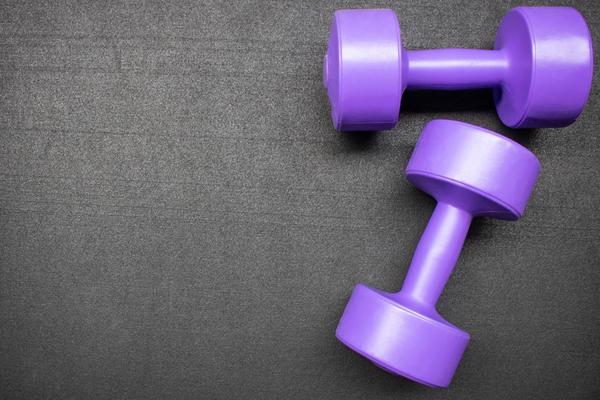
Cardio can help create the calorie deficit needed for weight loss, but it does not have to carry the whole job. A well-designed strength routine helps beginners build or preserve muscle while body weight comes down, improves everyday strength, and provides progress you can measure beyond the scale. The goal is not to turn every workout into a calorie-burning contest. It is to train consistently, progress gradually, and pair lifting with sensible nutrition and regular movement.
How strength training supports fat loss
Fat loss still depends on using more energy than you consume over time. Strength training supports that process by helping maintain lean mass during a calorie deficit. It also gives you useful markers of progress: more repetitions, better technique, and heavier loads can improve even when weekly changes on the scale are small.
Adults are generally advised to perform muscle-strengthening activity on at least two days each week, alongside regular aerobic activity. A beginner does not need six gym days or a complicated body-part split. Two to three full-body sessions can train the major muscle groups frequently while leaving recovery time between workouts.
The beginner strength training plan
Use two full-body workouts, Workout A and Workout B. If you can train three non-consecutive days per week, perform A on Monday, B on Wednesday, and A on Friday. The following week, switch to B, A, B. If three days feels like too much, train twice weekly and alternate the workouts.
For the first two weeks, perform two working sets of each exercise. Move to three sets once recovery feels manageable. Most exercises fit well in the 8-to-12-repetition range. Choose a weight that makes the last few repetitions challenging while still leaving about two or three good repetitions in reserve. Beginners usually progress faster by learning reliable technique than by repeatedly lifting to failure.
Workout A
Perform a goblet squat for 8 to 12 reps, a dumbbell bench press for 8 to 12 reps, a seated cable row for 8 to 12 reps, and a dumbbell Romanian deadlift for 8 to 10 reps. Finish with a dumbbell shoulder press for 8 to 12 reps and a plank for 20 to 40 seconds. Rest roughly 90 to 120 seconds after demanding lifts and 60 to 90 seconds after easier movements.
Workout B
Start with a leg press or supported split squat for 8 to 12 reps. Add a lat pulldown, incline dumbbell press, hip thrust, and chest-supported row for 8 to 12 reps each. Finish with a dead bug for 6 to 10 controlled repetitions per side. Together, these movements cover the legs, hips, back, chest, shoulders, arms, and trunk without requiring advanced barbell skills.
How often each muscle group is trained
Because both workouts are full body, the major muscle groups receive useful practice two or three times each week. That frequency works well for resistance training beginners because the workload is spread across the week instead of cramming many sets for one body part into a single day.
If you are still very sore when the next session arrives, do not add more exercises. Reduce a set, use a lighter load, or stay at two training days per week until recovery improves. More work only helps when you can recover from it.
Progress without turning every workout into a test
Use a simple repetition-range method. Suppose you bench press 20-pound dumbbells for 10, 9, and 8 reps. Keep the same weight next time and try to add one or two total repetitions. Once you can reach 12 reps on every set with controlled form, increase the load slightly and begin again near the lower end of the range.
This is what gives a strength training plan direction. Sweating more is not the same as getting stronger. Track exercises, weights, and repetitions so your weight lifting for fat loss has a clear progression from week to week.
Combine lifting with walking, cardio, and nutrition
Strength training should not replace all aerobic activity. Brisk walking, cycling, swimming, or other cardio can increase weekly activity and support cardiovascular health. Keep easy walking on most days if it suits you, then add one or two moderate cardio sessions if energy and recovery remain good. Avoid hard cardio immediately before a lower-body workout when possible.
Nutrition matters even more for the scale. Aim for a modest calorie deficit rather than an aggressive crash diet, include protein-rich foods regularly, and build meals around foods you can sustain long term. Useful related topics to explore include healthy calorie deficit planning, high-protein foods for weight management, and walking for weight loss.
A realistic first month
Imagine a beginner training Monday, Wednesday, and Friday. For the first two weeks, they perform two sets per exercise and focus on technique. In week three, they add a third set to the main movements. In week four, they increase weight only where they can already reach the top of the rep range with solid form. This may look less dramatic than a high-intensity challenge, but it creates a repeatable routine that can survive after the first burst of motivation fades.
Common mistakes that slow progress
Do not change the routine every week, chase soreness, or shorten rest periods simply to make training feel harder. Avoid cutting calories so aggressively that workout performance collapses. Body weight can also fluctuate because of water, food, sodium, and hormonal changes, so judge progress over several weeks rather than one morning.
FAQ
How many days a week should I strength train for fat loss?
Two to three full-body sessions per week are a practical starting point for beginners. This trains the major muscle groups at least twice weekly while leaving recovery days between sessions.
Are 8 to 12 reps best for fat loss?
No single rep range directly burns body fat better than all others. Eight to 12 reps is simply useful for beginners because it can develop strength and muscle with manageable loads. Fat loss still depends mainly on the overall calorie deficit.
Should I do cardio or weights first?
If strength is the priority, lift first while you are freshest and do cardio afterward or in a separate session. Easy walking can usually be done whenever it fits your day.
How quickly should I increase the weight?
Increase the load after you can perform the top of your target rep range with controlled technique across all working sets. Small increases are enough; consistent progression matters more than large jumps.
Build the routine you can repeat
The best strength training routine for fat loss is not the one that leaves you exhausted after every session. It is the one you can repeat while gradually getting stronger, staying active, and maintaining a sustainable calorie deficit. Start with two or three full-body workouts, keep the exercise list stable long enough to improve at it, and let progression happen in small steps. That gives beginners a practical path to losing fat without treating cardio as the only route forward.