
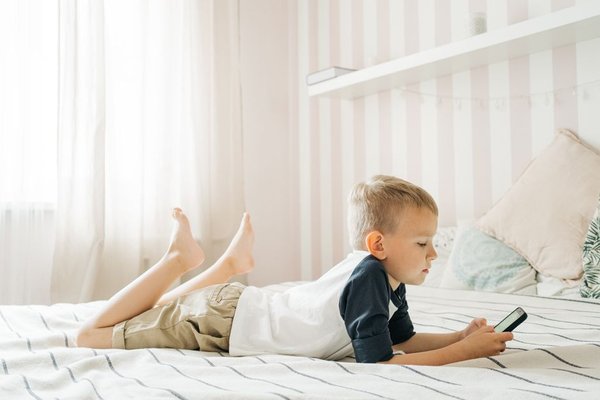
It starts innocently: one message while you brush your teeth, a short video under the covers, then a quick check of tomorrow’s weather. Suddenly, bedtime has moved half an hour later. Screen time before bed can affect sleep, but not simply because a phone produces blue light. What you watch, how long you stay engaged, and whether your device interrupts you after lights-out all matter.
The useful question isn’t whether every evening screen is harmful. It’s which parts of nighttime screen use make it harder to feel sleepy, fall asleep, or get enough rest—and what you can realistically change.
Why screens can change your sleep
Light sends an alertness signal
Your internal clock uses light as a major timing cue. As evening gets darker, melatonin normally rises, helping signal that biological night is approaching. Bright light late in the evening, including short-wavelength or blue-enriched light from displays, can suppress or delay that signal.
Research on blue light and sleep includes a controlled study comparing evenings of reading on a light-emitting tablet with reading a printed book. Tablet use was associated with later circadian timing, longer time to fall asleep, and lower alertness the following morning. The study involved prolonged reading under controlled conditions; it doesn’t mean a brief glance at a dim phone has the same effect.
Content keeps your mind working
A screen also delivers stimulation. A stressful work email can trigger problem-solving. A heated comment thread can leave you annoyed. An exciting game or cliffhanger may make you want another round, even when your eyes feel tired.
That’s why turning on a warm-colored display doesn’t automatically solve the problem. Night mode changes the color balance, but it cannot make upsetting news relaxing or stop an app from recommending one more video. Content, emotions, and light can work together to keep you awake.
Minutes on a device replace minutes asleep
Often the biggest cost is time. If you intend to sleep at 10:30 p.m. but scroll until 11:15, you’ve shortened your opportunity for sleep by 45 minutes unless you can wake later. Repeated over a working week, that adds up.
After you put your phone down, notifications, vibrations, and the temptation to check the clock may interrupt your wind-down. A phone beside the pillow makes returning to scrolling especially easy during a normal nighttime awakening.
A realistic screen cutoff works better than an impossible rule
A practical starting point is to stop interactive screen use 30 to 60 minutes before bedtime. Treat that window as an experiment, not a universal biological threshold. Some people need a longer gap; others benefit most from changing the type of content they consume.
Say your goal is to be asleep around 11 p.m. Set a 10 p.m. reminder to finish messages and set tomorrow’s alarm. At 10:15, plug the phone into a charger across the room. Spend the next 45 minutes showering, reading on paper, or having a quiet conversation. The aim is to remove stimulating content and the habit of repeatedly checking the time.
You don’t need a perfect routine to notice a difference. Protecting a consistent wake-up time and making space for enough sleep are also foundations of good sleep hygiene, alongside a dark, quiet bedroom. Small, repeatable changes tend to last longer than a strict digital ban abandoned after two days.
If you need bedtime technology, make it less disruptive
Sometimes a phone before bed is unavoidable: you may work late, coordinate family care, or use an accessibility feature. In that case, reduce the most disruptive parts rather than assuming the evening is ruined.
Lower screen brightness, use a warmer display setting, and avoid holding a bright screen close to your face in a dark room. Switch off nonessential alerts and choose a stopping point before opening an app. If you listen to an audiobook or guided relaxation, start it before bed, turn off the display, and avoid autoplay that encourages more browsing.
For reading, a paper book or a non-backlit reader with gentle room lighting may be easier to wind down with than a bright tablet. Powerful overhead lights can also affect evening light exposure; the phone isn’t the only light source to consider.
Find out which part of the habit costs you sleep
Try a seven-night comparison. For several evenings, keep your usual routine and note when you intended to sleep, when you stopped using devices, and roughly how long falling asleep seemed to take. On the remaining nights, use a defined cutoff while keeping your wake time reasonably consistent.
Don’t turn this into stressful minute-by-minute monitoring. Look for patterns: Do you get to bed earlier? Feel sleepier at lights-out? Reach for the phone less after waking? The most useful improvement may be an extra half-hour of sleep opportunity rather than an obvious change in how quickly you fall asleep.
If mornings remain difficult, consider caffeine timing, irregular sleep schedules, room temperature, or ongoing stress. A broader healthy bedtime routine may help more than adjusting a filter alone. Persistent insomnia, loud snoring, or significant daytime sleepiness deserves evaluation by a healthcare professional rather than another app setting.
Frequently asked questions
How long before bed should I stop looking at screens?
Many sleep organizations suggest reducing or avoiding handheld screens for about 30 to 60 minutes before bedtime. There’s no magic minute that fits everyone. Start with a manageable cutoff, then extend it if you still feel alert or regularly delay sleep.
Is watching TV before bed as disruptive as using a phone?
Both can delay bedtime or expose you to evening light. A television viewed from farther away may deliver a different amount of light to your eyes than a phone held close, while passive viewing can feel less engaging than messaging or gaming. Content, brightness, duration, and your response matter more than the device label.
Does night mode block the effects of blue light?
Night mode generally reduces the proportion of blue-enriched light, but doesn’t eliminate all light exposure or address mental stimulation. Dimming the display and ending screen use earlier are more comprehensive steps than relying on a color filter alone.
Can listening to something on my phone help me sleep?
It can be part of a calming routine if the content is relaxing and the screen stays off. Try a familiar audiobook, gentle audio, or a sleep timer. If choosing the next episode or checking notifications keeps you engaged, the habit may work against its purpose.
Make room for sleep, not just fewer screens
Screen time before bed isn’t one behavior. A two-minute alarm check, an hour of work email, and late-night video scrolling place different demands on your attention and sleep schedule. Start with the change that tackles your actual problem: dim the light, choose calmer content, move the device away, or reclaim the time you meant to spend sleeping.
A sustainable evening cutoff lets your mind slow down—and gives bedtime a better chance of staying where you planned it.