
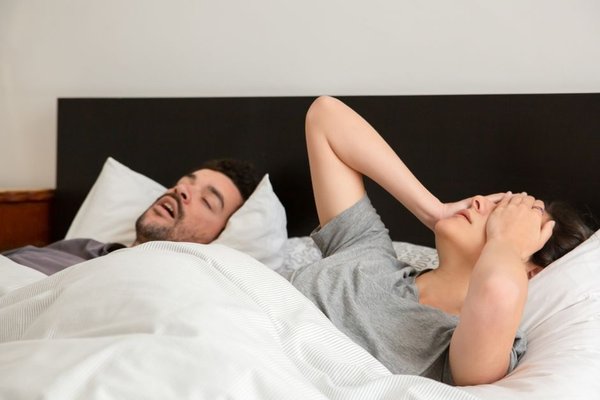
Sleep apnea symptoms are easy to miss because some of the clearest warning signs happen while you’re asleep. You might wake feeling exhausted despite spending eight hours in bed, while a partner notices loud snoring followed by an unsettling silence. Neither experience proves you have sleep apnea, but the pattern deserves attention.
Sleep apnea involves repeated interruptions in breathing during sleep. Most adults with the condition have obstructive sleep apnea, in which the upper airway becomes blocked or narrowed. A less common form, central sleep apnea, involves changes in the brain’s signals to the breathing muscles. The signs can overlap, so symptoms alone cannot tell you which type, if any, is present.
Nighttime signs of sleep apnea
Loud, frequent snoring
Persistent, disruptive snoring is a common clue, particularly when the sound changes abruptly or stops between breaths. Snoring and apnea are not the same thing: many people snore without having sleep apnea, and some people with sleep apnea do not snore noticeably. A partner’s description of the pattern is often more informative than loudness alone.
Breathing pauses followed by gasping
One of the more distinctive signs of sleep apnea is a witness noticing breathing pauses during sleep. The sleeper may appear to stop breathing briefly, then snort, choke or gasp as breathing resumes. These episodes can repeat without the person remembering them the next morning. If someone reports this pattern, arrange a medical assessment rather than trying to judge its severity by watching the clock.
Restless or repeatedly interrupted sleep
Some people wake suddenly feeling short of breath or experience frequent brief awakenings without understanding why. Others describe tossing and turning, fragmented sleep or difficulty staying asleep. You do not have to remember every interruption for sleep quality to suffer. Insomnia can have many causes, however, so it should be considered alongside other symptoms.
Dry mouth, morning headaches and nighttime bathroom trips
Waking with a dry mouth or headache can accompany sleep apnea. Repeated trips to urinate during the night can also occur. Each symptom is nonspecific: dry air, medications, dehydration and other health conditions may offer alternative explanations. A combination of these complaints, especially with witnessed breathing interruptions, makes the possibility more concerning.
Daytime symptoms that are easy to dismiss
Sleepiness that interferes with ordinary life
Daytime sleepiness is more than feeling a little slow before your first coffee. You might fight to stay awake while reading, watching television, sitting in a meeting or riding as a passenger. Some people doze unintentionally. Excessive sleepiness behind the wheel is particularly dangerous: do not drive when you feel unable to stay alert, and seek prompt medical advice.
Fatigue, poor concentration and changes in mood
Not everyone feels ready to fall asleep. Some describe constant fatigue, irritability, forgetfulness or difficulty following conversations. Interrupted sleep can affect attention and reaction time, making work and daily tasks harder. These complaints also occur with insufficient sleep, stress, depression, medications and other illnesses, so they should not be treated as a diagnosis on their own.
A practical clue is the mismatch between time in bed and how restored you feel. For example, someone may maintain a regular eight-hour sleep schedule but still struggle to concentrate each afternoon, while their partner reports gasping at night. That combination is worth discussing with a clinician even if the person has never awakened during an episode.
Can sleep apnea look different in women?
Yes. Although loud snoring is a familiar symptom, women may be more likely to report insomnia, tiredness, headaches or mood-related symptoms. Some never receive a report of obvious snoring or breathing pauses. Sleep apnea can therefore be overlooked when the discussion focuses exclusively on noisy sleep.
Risk can increase around pregnancy or after menopause, but age, body size and gender do not provide a reliable yes-or-no test. People who do not fit the usual stereotype can still have the condition. If persistent fatigue or broken sleep remains unexplained, tell your clinician about the full pattern rather than assuming apnea is impossible.
When should you seek medical evaluation?
Book an appointment if you have witnessed breathing pauses, repeated nighttime gasping, loud habitual snoring alongside daytime symptoms, or ongoing sleepiness despite adequate opportunity to sleep. A clinician can consider sleep history, medications, medical conditions and risk factors. If you live alone, you can still seek evaluation based on symptoms you notice; a witness is not required.
Before your visit, keep a brief sleep diary for one or two weeks. Record bedtime, wake time, awakenings, daytime naps, morning headaches and episodes of unintentional dozing. Ask a partner, if available, to describe any snoring or pauses without attempting to diagnose you. A short written account is often easier to discuss than trying to recall an entire month of nights.
If you experience severe breathing difficulty while awake, chest pain, fainting or another acute medical emergency, seek urgent care. These are not symptoms to attribute automatically to sleep apnea. Likewise, if sleepiness makes driving or hazardous work unsafe, stop the activity and obtain timely professional advice.
How doctors confirm sleep apnea
A sleep study is used to assess breathing during sleep and determine whether sleep apnea is present. Depending on your health history and circumstances, a clinician may recommend testing at home or an overnight study in a sleep laboratory. Home tests usually collect less information than laboratory polysomnography and are not suitable for every patient.
Consumer sleep trackers and phone recordings may help you notice a pattern, but they cannot reliably confirm or exclude sleep apnea. If a home sleep apnea test is negative or inconclusive yet symptoms remain strongly suggestive, your clinician may recommend a laboratory study. Understanding what happens during a sleep study can make the process feel less intimidating.
Frequently asked questions
Can you have sleep apnea without snoring?
Yes. Loud snoring is common but not universal. Unexplained sleepiness, waking gasping, insomnia or witnessed breathing pauses may justify evaluation even when nobody has heard you snore.
Does waking up tired mean I have sleep apnea?
No. Insufficient sleep, irregular schedules, other sleep disorders and medical conditions can all cause morning fatigue. Sleep apnea becomes a greater concern when tiredness occurs alongside nighttime breathing symptoms or repeated unexplained awakenings.
Can I tell if I stop breathing while asleep?
Often not. Some people wake with a choking sensation, but many have no memory of the interruptions. A bed partner may notice them, and a properly selected sleep study can assess breathing objectively.
Are sleep apnea symptoms treatable?
Yes. Once the condition is diagnosed, treatment may include positive airway pressure therapy, an appropriate oral appliance, or other measures depending on the type and severity. A clinician can recommend an approach rather than relying on symptom-based self-treatment.
Take persistent warning signs seriously
The clearest reason to investigate sleep apnea is a recurring pattern, not a single rough night. Breathing pauses during sleep, gasping, habitual snoring and daytime sleepiness are useful clues, while subtler fatigue or insomnia also matter. Pay attention to what happens both overnight and during the day, document the symptoms you can, and seek a medical evaluation. That is the reliable route from suspicion to answers and, when needed, effective treatment.